Emergency roof repairs 24/7 — Call now: 0239 307 1334
★ 4.9/5 · 127 Reviews · Verge & Ridge Systems

Dry Verge & Dry Ridge in Portsmouth

Dry verge and dry ridge systems across Portsmouth's post-war estates — replacing the cracked mortar that lets wind lift tiles and rain get in. Mechanically-fixed, maintenance-free and compliant with BS 8612, on the estates where mortar failure is endemic.

📅 Get My Free Quote — Callback Within 2 Hours

Tell us the job in 30 seconds. No pushy sales, no call-out fee.

📞 Call Now: 0239 307 1334

Dry verge in Portsmouth costs £250 to £600 per gable in 2026, with dry ridge systems £400 to £900. These mechanically-fixed, mortar-free systems replace the cracked bedding mortar that fails on Portsmouth's post-war estates, resisting wind uplift and meeting BS 8612. Ideal for Paulsgrove, Leigh Park and Bridgemary concrete-tile roofs. Free survey — call 0239 307 1334.

✓ NFRC Registered
✓ Fully Insured
✓ 10-Year Guarantee
✓ Free Quotes
✓ No Hidden Costs
Roof RepairsRoof ReplacementFlat RoofingEmergencyRoof InspectionsLead RoofingChimney RepointingGutteringGutter CleaningFascias & SoffitsMoss RemovalVelux & SkylightsDry VergeLandlord RoofingCommercial

Dry Verge and Dry Ridge in Portsmouth

The verge is the edge of the roof at a gable end, and the ridge is the horizontal apex — both traditionally bedded in mortar to hold the tiles and keep out wind and rain. On Portsmouth's exposed, salt-weathered roofs that mortar cracks, crumbles and lets go, allowing wind to lift the edge tiles and rain to track in behind them. Dry verge and dry ridge systems replace the mortar with mechanically-fixed dry components — interlocking verge caps and a ventilated ridge fixed with screws and clamps — that need no maintenance, resist wind uplift, and comply with the current British Standard. On Portsmouth's large post-war estates, where mortar failure is endemic, they are the durable modern answer.

Why Mortar Fails on Portsmouth Roofs

Bedding mortar on a verge or ridge is exposed masonry in the most weather-beaten position on the roof, and Portsmouth punishes it. Coastal salt accelerates the carbonation that weakens the mortar, the constant flexing of tiles in wind cracks the bond, and the freeze-thaw cycle prises the cracks wider each winter. Once the mortar cracks, water gets behind the verge or under the ridge, wind gets under the loosened tiles, and the failure accelerates. On the post-war estates the problem is compounded by age — the original 1950s to 1980s mortar bedding is now decades past its reliable life across whole estates at once. Re-bedding in mortar simply restarts the same failure clock; a dry system ends it.

The Post-War Estates Where Dry Verge Matters Most

Portsmouth's dry verge and dry ridge market is concentrated on its large post-war concrete-tile estates, and for good reason. Paulsgrove, on its exposed chalk ridge above the city, takes the full force of Meon Valley winds from the north and west — the worst verge and ridge exposure in the area, and the estate where wind-lifted verge tiles are most common. Leigh Park, one of the largest post-war estates in England, has thousands of properties whose 1950s and 60s mortar bedding is failing simultaneously. Bridgemary and Rowner in Gosport, and the 1970s and 80s growth estates of Waterlooville — Purbrook, Cowplain, Lovedean — carry the same concrete-tile stock with the same ageing mortar. These are the roofs where a dry system delivers the clearest benefit.

Wind Funnelling and Elevation on Paulsgrove

Paulsgrove deserves specific mention because its geography makes verge and ridge failure worse than anywhere else in Portsmouth. The estate sits on an elevated chalk ridge with open downland to the north, so northerly and westerly winds arrive with no shelter and funnel across the exposed roofs. A cracked mortar verge on a Paulsgrove property does not just leak — in a strong wind the loosened verge tiles can lift and be thrown, a genuine safety hazard as well as a roofing failure. Dry verge, mechanically clamped to the tile battens, holds the verge tiles down against exactly the uplift forces that Paulsgrove's exposure generates. For ridge-position estate properties it is as much a safety upgrade as a maintenance one.

Dry Ridge and Full Systems

Alongside dry verge we fit dry ridge systems, which replace the mortar-bedded ridge tiles at the roof apex with a ventilated, mechanically-fixed ridge. This does two jobs at once: it removes the failing mortar bond that lets ridge tiles slip and lets wind in, and it adds roof-space ventilation that helps control the condensation common in older estate lofts. On a full re-ridge we fix each ridge tile with a screw and clamp to a ventilated roll, so the ridge is both weathertight and breathing. We can fit dry verge and dry ridge together as a complete edge-and-apex upgrade, or address whichever is failing — many Portsmouth estate roofs need both, having been built with the same mortar bedding throughout.

How Much Does Dry Verge Cost in Portsmouth?

SystemCost GuideNotes
Dry verge (per gable)£250–£600Mechanically-fixed verge caps
Ridge re-bed (mortar)£200–£500Traditional — shorter life
Dry ridge (full, mechanically fixed)£400–£900Ventilated, BS-compliant
Dry verge + dry ridge (combined)£600–£1,300Full edge-and-apex upgrade
Verge tile replacement (storm-lifted)£150–£400Following wind damage
Whole-estate-type semi (both gables + ridge)£900–£1,600Common on post-war stock

BS 8612 has set the standard for dry-fixed verge systems since the 2018 revision of BS 5534, which effectively ended reliance on mortar-only fixing for verges and ridges.

Source: BS 8612 (mandatory since 2018 BS 5534 revision)

Free Dry Verge Survey in Portsmouth

We assess your verge and ridge mortar, and specify dry verge or dry ridge to end the failure for good. Ideal for post-war estate roofs. Call 0239 307 1334.

Call 0239 307 1334
Reviews

What Portsmouth Customers Say About Our Dry Verge Work

★★★★★

"Dry verge on both gables of our Paulsgrove semi — the mortar had cracked and a verge tile lifted in a gale. Now mechanically fixed, no more worrying every time it blows. Great job."

Colin H. · Paulsgrove, Portsmouth
★★★★★

"Dry ridge and verge on our Leigh Park property — the original mortar was 60 years gone. They did the full edge and apex, added ventilation to the loft too. Maintenance-free now."

Brenda W. · Leigh Park, Havant
★★★★★

"Cowplain semi, verge mortar failing on both sides. They explained why re-bedding would just fail again and fitted dry verge instead. Straight advice, proper solution."

Trevor M. · Cowplain, Waterlooville
Honest advice

Is Dry Verge the Right Fix?

A full re-roof is the right call when repairs keep recurring, nail sickness affects multiple slopes, or the covering has reached the end of its life for its type.

When it is not the answer: If the tiles are sound but the fixings have failed, a strip-and-relay re-fix costs far less than a full replacement Read the full guide.
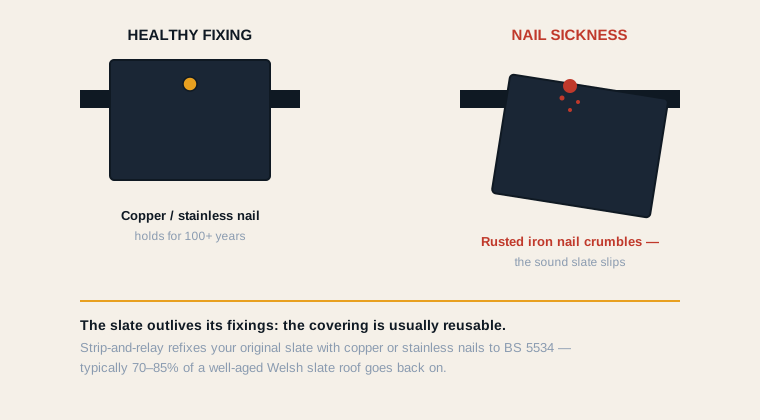
Nail sickness: a corroded iron nail crumbles and a sound slate slips off the roof
The slate outlives its fixings: strip-and-relay reuses your original slate with stainless nails.
Local factors

Local Factors in Portsmouth

Solent salt air and exposed Channel weather corrode fixings and lift tiles faster than inland Hampshire. Portsea Island's dense Victorian terraces mean rear elevations are often reached only through tight alleys, and front scaffold needs permit-controlled pavement space. It is why we specify marine-grade fixings and correct lead codes as standard on Portsmouth roofs — the coastal environment punishes anything less.

The process

What to Expect: Dry Verge in Portsmouth

1. Survey

We assess the whole roof — covering, fixings, timbers and underlay — and confirm whether re-roofing or re-fixing is the honest answer.

2. Written quote

An itemised fixed quote: materials, marine-grade fixings, scaffold, waste and guarantee, with no vague allowances.

3. Scheduling

We book the work and erect scaffold; most re-roofs start within a fortnight of acceptance.

4. The work

Strip, inspect and replace defective timbers, fit breathable underlay, batten and re-cover with marine-grade stainless fixings to BS 5534.

5. Cleanup & sign-off

Full site clear, waste removed, final inspection and your transferable 10-year guarantee handed over.

Timescales

Typical Timescales

JobTypical duration
Terrace roof re-cover3–5 days
3-bed semi re-roof5–8 days
Detached / complex roof1–2 weeks
Added timber or structural repair+1–2 days
Scaffold erect and strikeIncluded in programme

Sustained rain or high wind pauses stripping — we never leave a roof open overnight and weatherproof at the end of each day.

Access

Getting Safely onto Portsmouth Roofs

A full re-roof always needs scaffold to every elevation for safe working and materials handling. Scaffold is specified for: the full duration of any re-roof — it is included and itemised in the quote, never a hidden extra - always itemised in your written quote, never a hidden extra, and we arrange it.

Portsea Island's dense Victorian terraces mean rear elevations are often reached only through tight alleys, and front scaffold needs permit-controlled pavement space. Pavement scaffold and skip permits go through Portsmouth City Council; allow a few working days on streets like Albert Road, Fawcett Road, Marmion Road where space is tight.

Guarantee

Your Guarantee, Explained

The complete re-roof carries a 10-year written workmanship guarantee, transferable if you sell, with manufacturer warranties on tiles and underlay on top.

If a fault appears in covered work, we come back and put it right. No quibbling, no re-charge.

Good to know

Living Around the Work

A re-roof means a week or more of scaffold, skip and daily activity — we protect the garden and drive, keep the site tidy, and agree access and parking before we start. You do not need to stay home for external work - we just need power and access agreed in advance.

Re-roofs run through most of the year; we programme around forecast weather and stage the strip so the roof is never exposed to a wet night. Solent salt air and exposed Channel weather corrode fixings and lift tiles faster than inland Hampshire.

Prefer to talk it through? A local Portsmouth roofer will answer — call 0239 307 1334.

FAQ

Frequently Asked Questions

Dry verge costs £250 to £600 per gable, dry ridge £400 to £900, and a combined edge-and-apex upgrade £600 to £1,300. A typical post-war semi with both gables and the ridge runs £900 to £1,600.

Dry verge replaces cracked bedding mortar with mechanically-fixed interlocking caps that resist wind uplift and need no maintenance. Mortar cracks and fails in Portsmouth's coastal and freeze-thaw conditions; dry verge does not.

The post-war concrete-tile estates — Paulsgrove, Leigh Park, Bridgemary, Rowner, and the Waterlooville growth estates — where 1950s to 80s mortar bedding is failing across whole estates at once. Exposed Paulsgrove is the priority area.

BS 8612 has set the standard for dry-fixed verge systems since the 2018 revision of BS 5534, which effectively ended reliance on mortar-only fixing. New and re-roofed verges should meet it.

Coastal salt accelerates mortar carbonation, wind flexing cracks the bond, and freeze-thaw widens the cracks each winter. On post-war estates the original mortar is now decades past its reliable life.

Yes — on exposed ridge estates like Paulsgrove, cracked mortar lets wind lift and throw verge tiles, a genuine hazard. Dry verge clamps the tiles down against exactly that uplift, making it a safety upgrade as well as a repair.

Yes — a combined upgrade addresses both the roof edge and apex, which on post-war estate roofs usually fail together having been mortar-bedded throughout. We can do both or whichever is failing. Call 0239 307 1334.

Related Services

Related Roofing Services in Portsmouth

Roof RepairsRoof ReplacementChimney RepointingRoof InspectionsStorm DamageMoss RemovalGutteringEmergency
Get In Touch

How Do I Get a Free Quote?

No call-out fees. No obligation. Local Portsmouth roofers.

0239 307 1334